Dream Bear: Integrating a Quirky Premium Font into Professional Design Workflows
In the landscape of modern graphic design, typography is rarely just about readability; it is about establishing a distinct voice before a single word is read. For professionals seeking to inject personality without sacrificing elegance, Dream Bear has emerged as a versatile asset. It is not merely a typeface but a strategic tool for branding, packaging, and digital media that bridges the gap between playful quirkiness and premium sophistication.
This article explores how Dream Bear fits into practical design workflows, from initial concept development to final production. Whether you are a freelancer crafting a brand identity or a small business owner designing product labels, understanding the integration of this font can streamline your creative process and elevate your visual output.
Understanding the Typography Profile
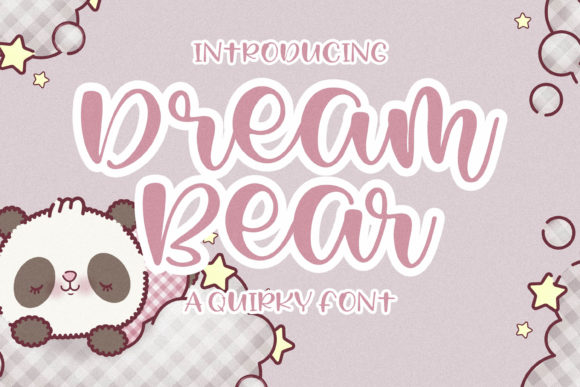
Dream Bear is characterized by its unique blend of whimsy and refinement. Unlike standard sans-serifs or rigid serifs, this font offers a "premium signature taste" that feels both handcrafted and polished. Its quirky nature allows it to stand out in crowded marketplaces, while its structural integrity ensures it remains legible and professional across various mediums.
When evaluating a font for a project, designers must consider the emotional resonance of the typeface. Dream Bear evokes a sense of luxury mixed with approachability. This duality makes it suitable for a wide array of applications:
- Branding and Logos: The distinctive shapes create memorable visual identities.
- Packaging and Labels: It adds a tactile feel to physical products like mugs, homeware, and shopping bags.
- Editorial and Print: Ideal for book covers, invitation cards, and greeting cards where personality matters.
- Digital Media: Effective for social media graphics, watermarks, and photography overlays.
Recognizing these use cases early in the planning phase helps prevent misalignment between the client’s vision and the designer’s execution. Dream Bear is not a utility font for body text; it is a display font meant to carry the primary message or aesthetic weight of a project.
Pre-Production: Planning and Compatibility Checks
Before opening any design software, a crucial step in the workflow is verifying technical compatibility and licensing. Using Dream Bear effectively requires ensuring that the font files are correctly installed and licensed for the intended scope of use.
File Management and Installation
For efficient workflow management, organize your font libraries systematically. Place Dream Bear in a dedicated folder labeled "Display" or "Quirky Serifs" to distinguish it from functional body fonts. This organization reduces search time during rapid prototyping phases.
Ensure that the font format (typically .OTF or .TTF) is compatible with your primary design tools, such as Adobe Illustrator, Photoshop, Affinity Designer, or Canva. If you are collaborating with a team, verify that all members have access to the font files to maintain consistency across different workstations.
Licensing Considerations
Because Dream Bear is positioned as a premium font, licensing terms may vary depending on whether the project is for personal use, commercial clients, or large-scale manufacturing. Always review the license agreement before finalizing designs for:
- Physical merchandise production (e.g., printing on thousands of t-shirts).
- Digital distribution (e.g., embedding in apps or e-books).
- Client deliverables where ownership rights need to be clearly defined.
Neglecting this step can lead to legal complications later. A clear understanding of usage rights is part of professional due diligence.
Implementation: Integrating Dream Bear into Creative Projects
Once the preparatory steps are complete, the focus shifts to implementation. How Dream Bear is used depends heavily on the specific project goals. Below are practical strategies for integrating the font into common design scenarios.
Logo and Brand Identity Development
In logo design, Dream Bear serves as a strong focal point. Its quirky characteristics allow it to convey uniqueness immediately. However, because it is visually dense, it should be paired with simpler, neutral fonts for secondary information such as taglines or contact details.
Workflow Tip: Create multiple variations of the logo using Dream Bear. Test it in black and white first to ensure the shape holds up without color assistance. Then, apply it to mockups of business cards and letterheads to assess scalability. A logo must remain effective at both large billboard sizes and small favicon dimensions.
Product Packaging and Label Design
For homeware, mugs, and product packaging, Dream Bear adds a layer of perceived value. The font’s premium feel aligns well with luxury goods, artisanal foods, or boutique items. When designing labels, consider the curvature of the product. Dream Bear’s letters may need slight kerning adjustments to follow circular paths smoothly.
Practical Application: Use Dream Bear for the product name or main headline on the package. Reserve smaller, highly readable sans-serif fonts for ingredients, instructions, or barcodes. This hierarchy guides the consumer’s eye to the brand name first, then to the necessary details.
Event Invitations and Greeting Cards
In the realm of special events, invitations set the tone. Dream Bear is particularly effective for weddings, birthday parties, or corporate galas where a touch of elegance and fun is desired. The font’s quirks can reflect the celebratory nature of the event.
Design Strategy: Experiment with spacing. Increasing the tracking (letter-spacing) can lend an airy, high-end feel, while tight spacing might create a bold, impactful statement. Combine Dream Bear with complementary colors and textures, such as gold foil or embossed paper, to enhance the tactile experience.
Post-Production: Quality Control and Output
After the design is complete, rigorous quality control ensures that Dream Bear renders correctly in the final output. This phase is critical for maintaining professionalism.
Proofreading and Kerning
Display fonts often have unique character interactions. Check for awkward gaps or collisions between letters, especially in words with tall ascenders or deep descenders. Adjust kerning pairs manually if the auto-kerning feature does not achieve the desired balance.
Checklist for Review:
- Are there any unintended ligatures or glyph substitutions?
- Is the contrast between Dream Bear and supporting fonts harmonious?
- Does the text remain legible at the smallest intended size?
Exporting for Different Mediums
The final export settings depend on the medium. For print projects like posters, name cards, or book covers, ensure the file is exported in high-resolution PDF with CMYK color mode. Embed the font outlines or convert text to paths if sending files to external printers who may not have Dream Bear installed.
For digital uses, such as website headers or social media quotes, export as PNG or SVG for crisp scaling. If using Dream Bear in video editing for watermarks or intros, ensure the font supports the required transparency and animation effects in your editing software.
Long-Term Consistency and Asset Management
Using Dream Bear effectively is not a one-time decision but part of a long-term brand strategy. Consistency builds recognition. If you incorporate Dream Bear into your logo or key marketing materials, maintain its usage guidelines across all future communications.
Create a simple style guide that specifies:
- The correct spelling and capitalization of Dream Bear.
- Minimum size requirements for legibility.
- Approved color combinations and background contrasts.
- Fonts that pair well with it for body text.
By documenting these rules, you ensure that whether you are working alone or managing a team, the visual identity remains cohesive. This discipline is essential for entrepreneurs and marketers who want their brand to appear established and trustworthy.
Conclusion
Dream Bear is more than just a decorative typeface; it is a strategic element that can enhance the perceived quality and personality of a design project. By approaching its use with careful planning, technical verification, and thoughtful implementation, designers and business owners can leverage its quirky yet premium nature to create compelling visuals.
From logos and packaging to digital watermarks and event invitations, Dream Bear offers a flexible solution for those seeking to add a signature touch to their work. Integrate it wisely, respect its technical requirements, and let it contribute to a consistent, professional, and engaging brand narrative.